
Why Your Cat Ignores the Scratching Post
You bought the post. It is still in the corner, still clean, still wrapped in the same tight sisal it came with. Meanwhile the arm of the sofa looks like it lost a fight. This is the most common complaint in cat ownership that has nothing to do with the cat being difficult, and in nearly every case the post is the thing at fault rather than the animal.
Cats are not ignoring the post out of spite. They are refusing it because it fails at the job they actually need it for. Once you know what that job is, the fix is usually cheap and sometimes free.
Scratching is not about sharpening claws
The old explanation, that cats scratch to keep their claws sharp, is close enough to sound right and wrong enough to lead you to the wrong product. Scratching does shed the worn outer sheath of the claw, but that is a side effect. The main reasons are posture and communication.
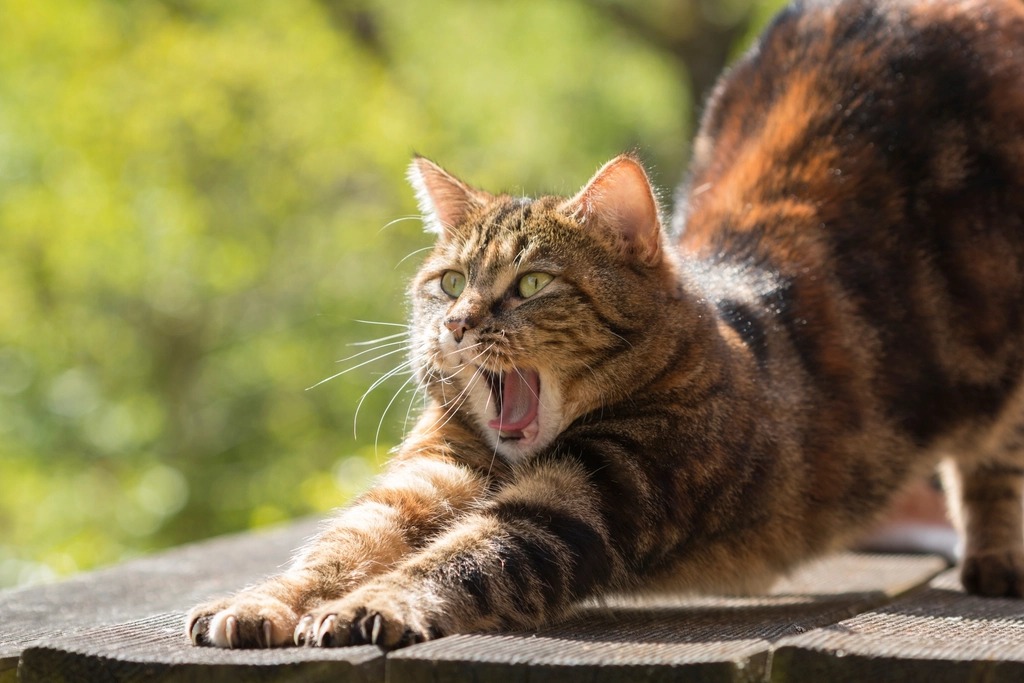
Watch a cat scratch properly. It reaches up, sinks the claws in, then pulls down and back with its whole body, shoulders and spine working. That is a full body stretch with resistance, closer to what you would get from a pull up bar than from a nail file. There are also scent glands between the toes, so a scratched surface is a message left for any other cat in the house.
Both of those needs explain the behaviour you are seeing. A cat that cannot stretch properly on the post will find something it can stretch on. A cat that wants to leave a mark at the entrance to a room will not walk to a corner to do it.
Most posts are too short, and it is not close
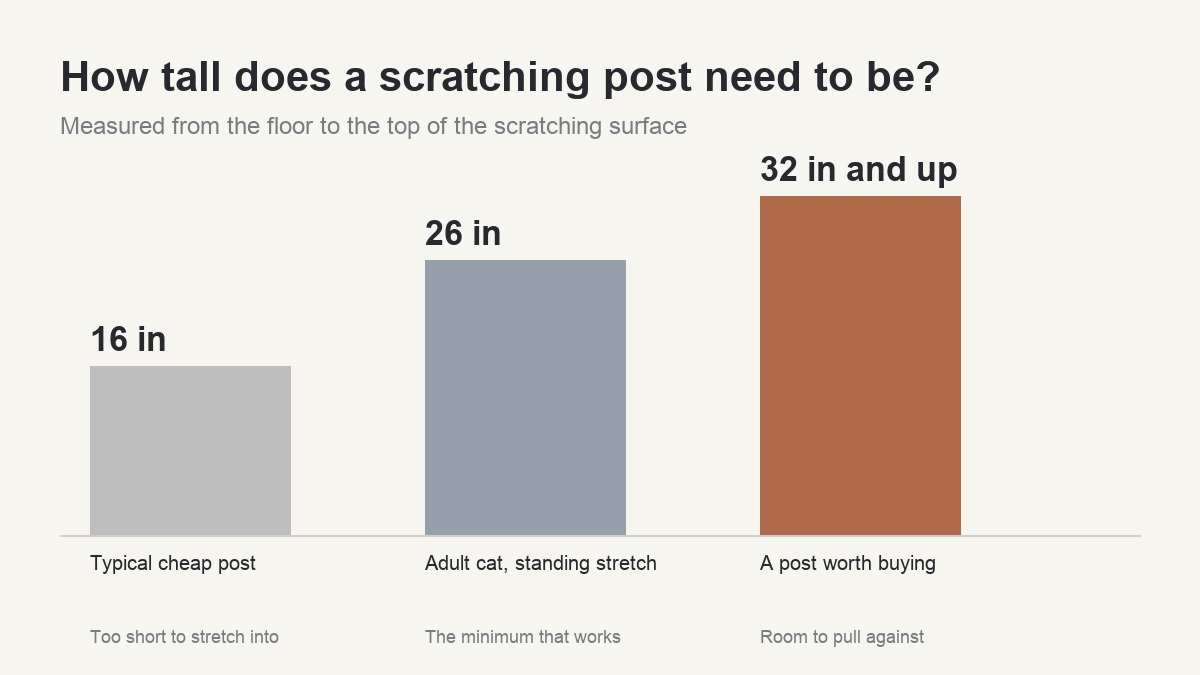
This is the single biggest reason a post goes unused. An average adult cat standing on its back legs and reaching up covers around 26 inches. Plenty of posts sold as full size stop at 16 or 18 inches, which means the cat has to crouch to use it. Nothing about that resembles a stretch, so the cat does it once and never again.
Measure from the floor to the top of the scratching surface, not to the top of the whole unit. A post with a 12 inch base, a platform and then a short column of sisal is mostly furniture. What matters is the uninterrupted run of material the cat can pull against.
The other half of this is stability. A post that rocks when a nine pound cat throws its weight backwards is worse than no post, because the cat learns it is unreliable. Weighted bases, wall fixings or a wide footprint all solve it. If you can push the top with one finger and feel it give, your cat already knows.
You put it where you want it, not where the cat is
Posts get placed where they are least in the way, which is almost always where the cat has least reason to go. Scratching is territorial, so it happens at the edges of a territory and at the places a cat passes through or wakes up in.
Three placements that work, in rough order of success. Next to where the cat sleeps, because the first thing a cat does on waking is stretch. Beside the doorway of the room the household uses most, because that is a boundary worth marking. And directly in front of whatever is currently being shredded, which feels like surrender but is the fastest fix there is.
You can move it later. Shift it a foot every few days once the habit is established and most cats follow it without noticing.
Sisal, cardboard and carpet are not interchangeable
Texture decides whether a cat commits. Sisal rope is the safest default because it has enough grip to hold a claw and enough give to let it pull free, which is the sensation cats seem to be after. Corrugated cardboard is popular for good reason and many cats prefer it, though it sheds and needs replacing. Carpet is the one to avoid, and not because cats dislike it. They like it too much, and they cannot tell the difference between the carpeted post and the carpet on your stairs.
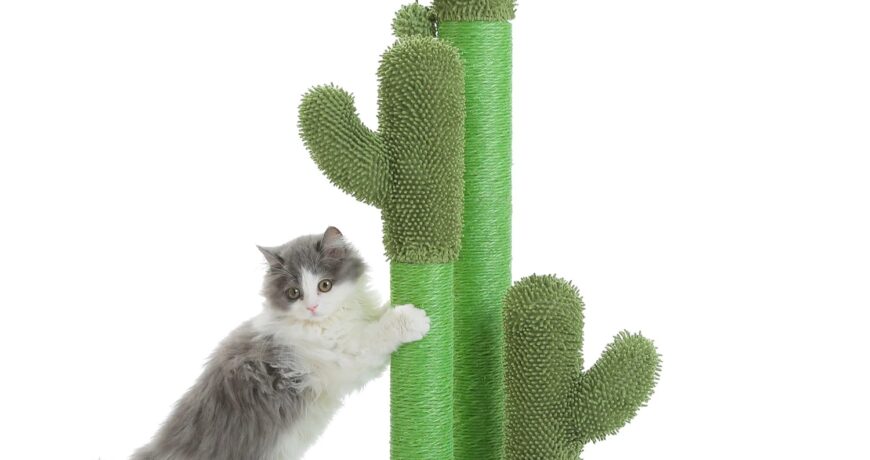
Shape matters less than people think, with one exception: a cat that likes to scratch at more than one angle will use a unit that offers more than one. Our cactus scratching post works on that principle, with three sisal arms at different heights on a weighted base, so two cats can use it at once and one cat can pick an angle. It also looks enough like a houseplant that nobody minds where it stands, which matters more than it should.
Going up the wall counts as scratching too
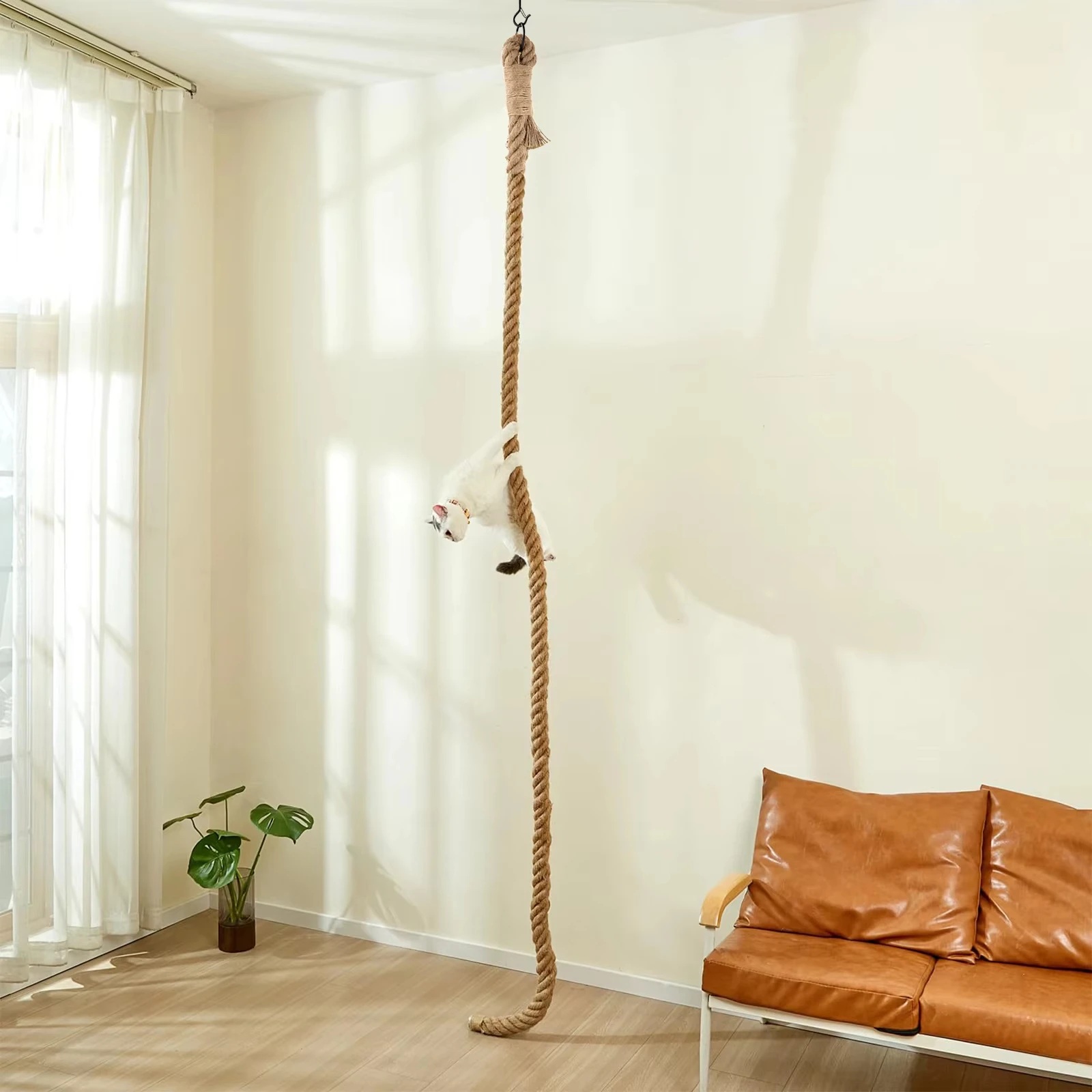
Floor standing posts are not the only option, and in a small flat they are often the worst one because they eat the floor you do not have. Vertical routes give a cat the same stretch plus the height it wants anyway.
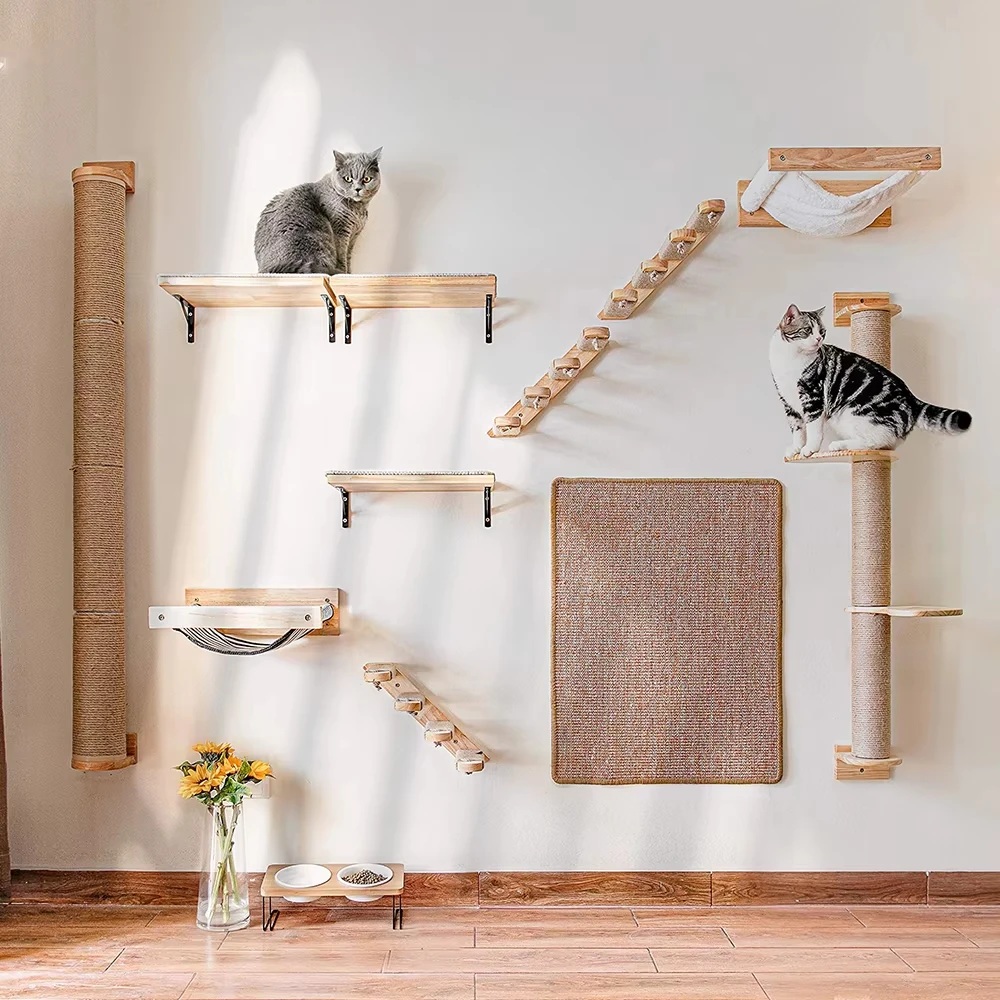
A sisal climbing rope fixed between ceiling and floor takes claws much the way bark does, and it occupies a column of air rather than a square of carpet. Wall mounted steps with a sisal post do the same job and add somewhere to sit at the top, which is usually the real prize. Height is how a cat decides a room is safe, and the cat with nowhere to climb is often the one taking it out on the furniture at floor level.
If the sofa has already lost
Replacing the behaviour works better than punishing it, and punishment tends to make a cat scratch more because stress is itself a trigger.
Put the new post directly against the damaged spot, so the better option is closer than the old one. Make the sofa briefly unpleasant with double sided tape or a loose throw that shifts underfoot, since cats dislike surfaces that move unpredictably. Leave both in place for two or three weeks, which is roughly how long it takes for the new habit to hold, then take the tape off and move the post an inch at a time if you want it somewhere else.
Trim the tips of the front claws every couple of weeks while you are retraining. It does not stop the urge and it should not, but it limits what a relapse costs you.
The short version
If you only change one thing, change the height. A post the cat can stretch to full length on, that does not wobble, placed where the cat already spends time, solves most of these cases on its own. Texture and shape are refinements on top of that. A post that fails the height test will not be rescued by anything else, however good it looks in the room.
