
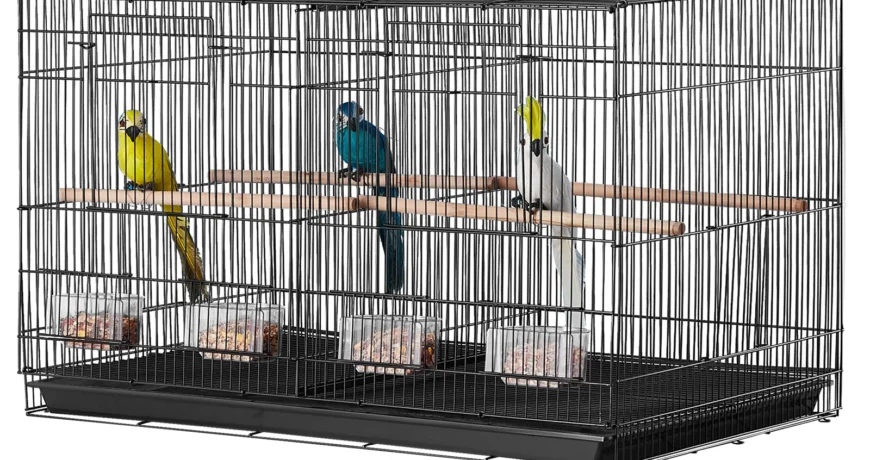
Flight Cage for Parakeets: How to Get the Size Right
Pet shops sell tall, narrow cages because they look elegant in a corner and they fit on a shelf. Budgies and cockatiels fly across a space, not up it, so a tall cage gives a bird a lot of room it will never use and very little of the room it needs.
Here is what the numbers actually say, and what they mean when you are standing in front of two cages trying to pick one.
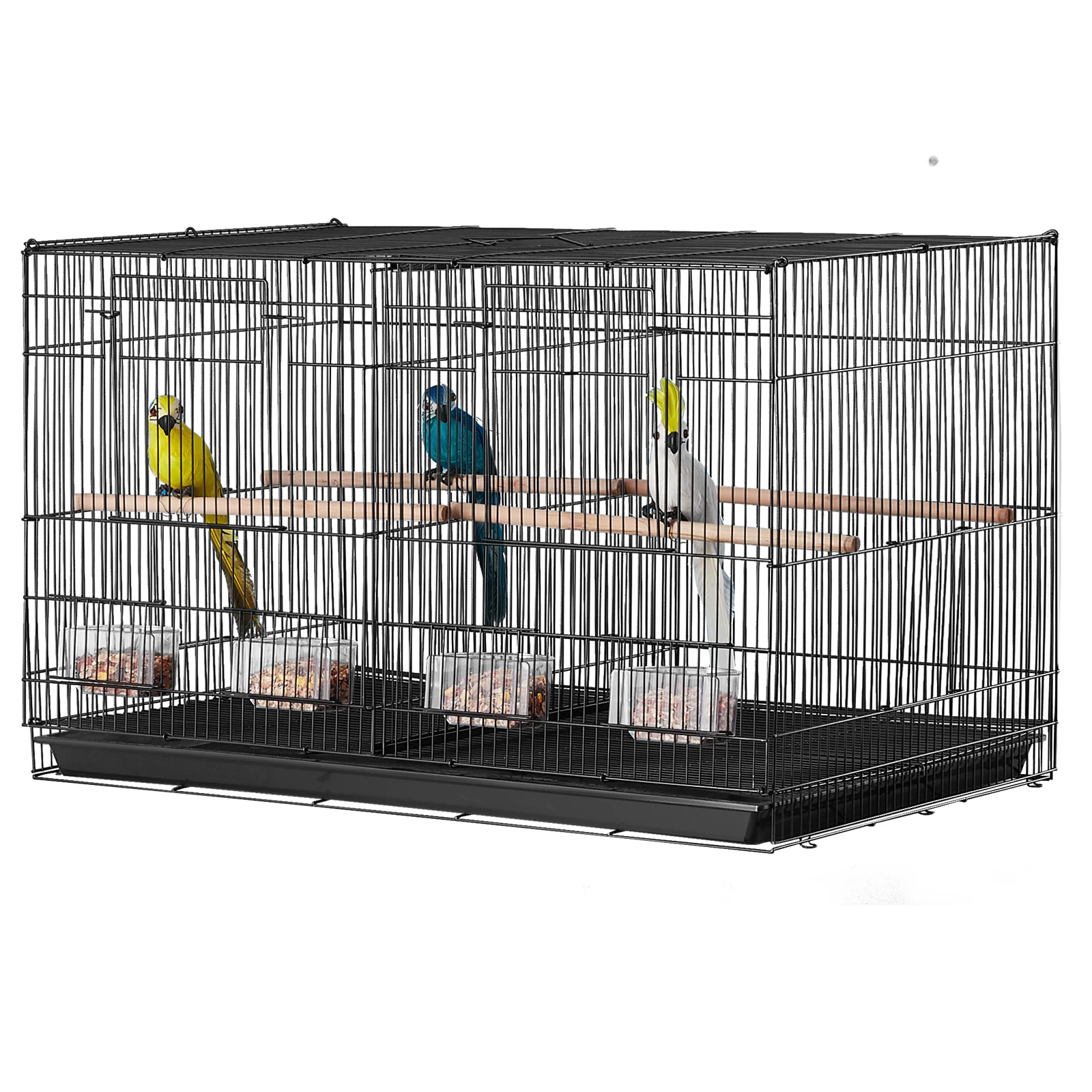
Width is the number that matters
A budgie has a wingspan of roughly 10 to 14 inches. To take even two or three proper wing beats before it has to turn, it needs about 30 inches of clear horizontal run. Anything less and the bird is hopping between perches rather than flying, which over months shows up as weak flight muscles and a bored bird.
Height does far less than people expect. A bird will use the top of a cage as a lookout, but it will not fly vertically for exercise. Given a choice between a cage that is 30 inches wide and 18 tall or one that is 18 wide and 30 tall, take the wide one every time.
The bar spacing rule is a safety rule, not a preference
Spacing should be no more than half an inch. The reason is blunt: a budgie that pushes its head through a wider gap can get the skull past the bars and then cannot pull it back, and birds have been lost that way. Five eighths or three quarters of an inch, which is common on cages sold for larger parrots, is genuinely dangerous for a small bird.
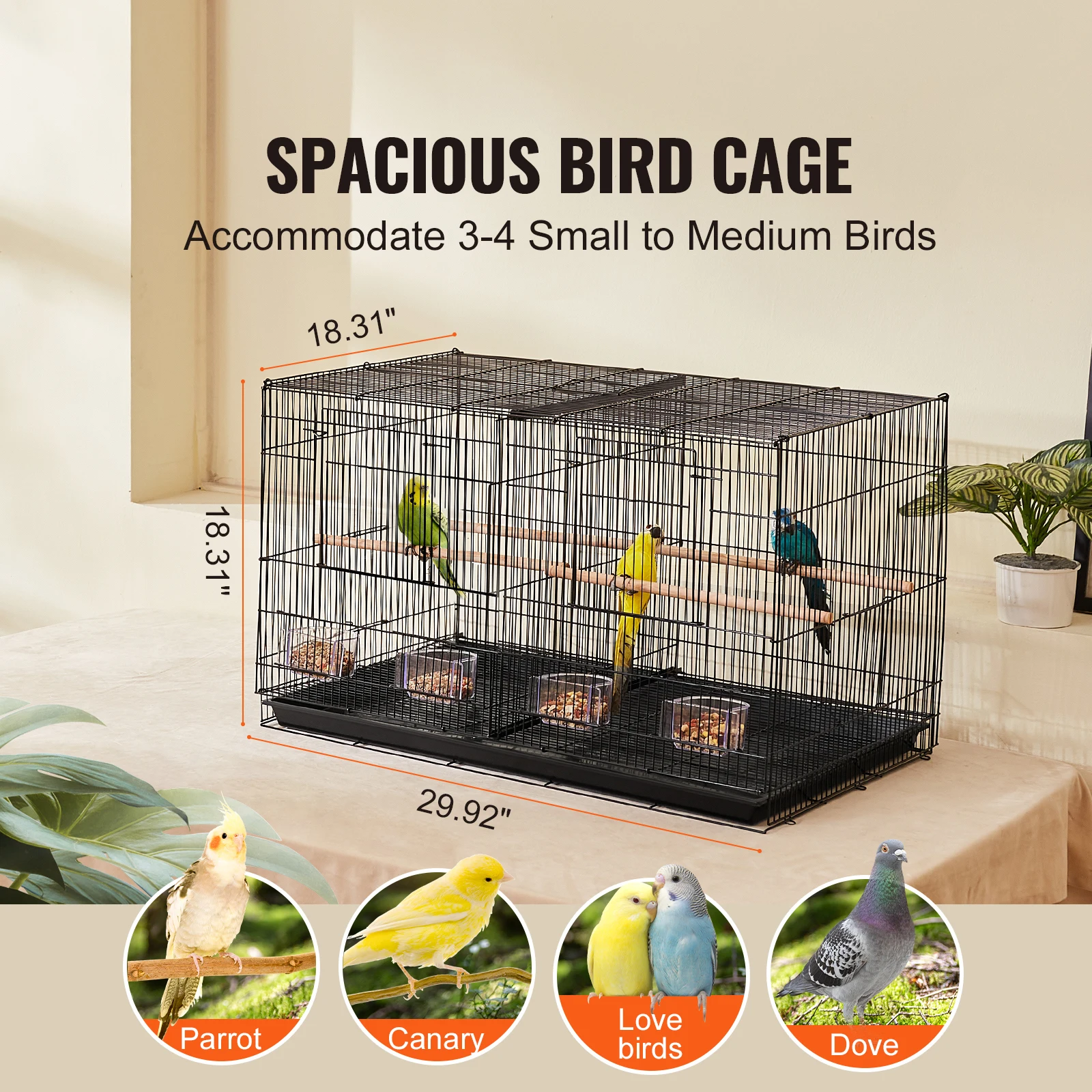
Our cage runs 0.4 inches between wires, which sits comfortably under the limit for parakeets, finches, canaries, lovebirds and cockatiels. Check this number before anything else on any cage you look at, because no amount of space makes up for a gap a bird can get stuck in.
What the minimums really mean
The commonly quoted veterinary minimum for a single budgerigar is around 20 by 20 by 20 inches, with half inch bar spacing. Those are floors, not targets. A bird kept at the floor of the range for years is being kept legally rather than well.
Being straight about our own cage: it measures 29.9 by 18.1 by 18 inches. That beats the minimum comfortably on the dimension that matters for flight and sits just under 20 inches on depth and height. If you want a single budgie in something that exceeds every published minimum in all three directions, you want a bigger box than this one. If you want a bird that can actually fly a few lengths in a room sized cage, the width is the thing doing the work.
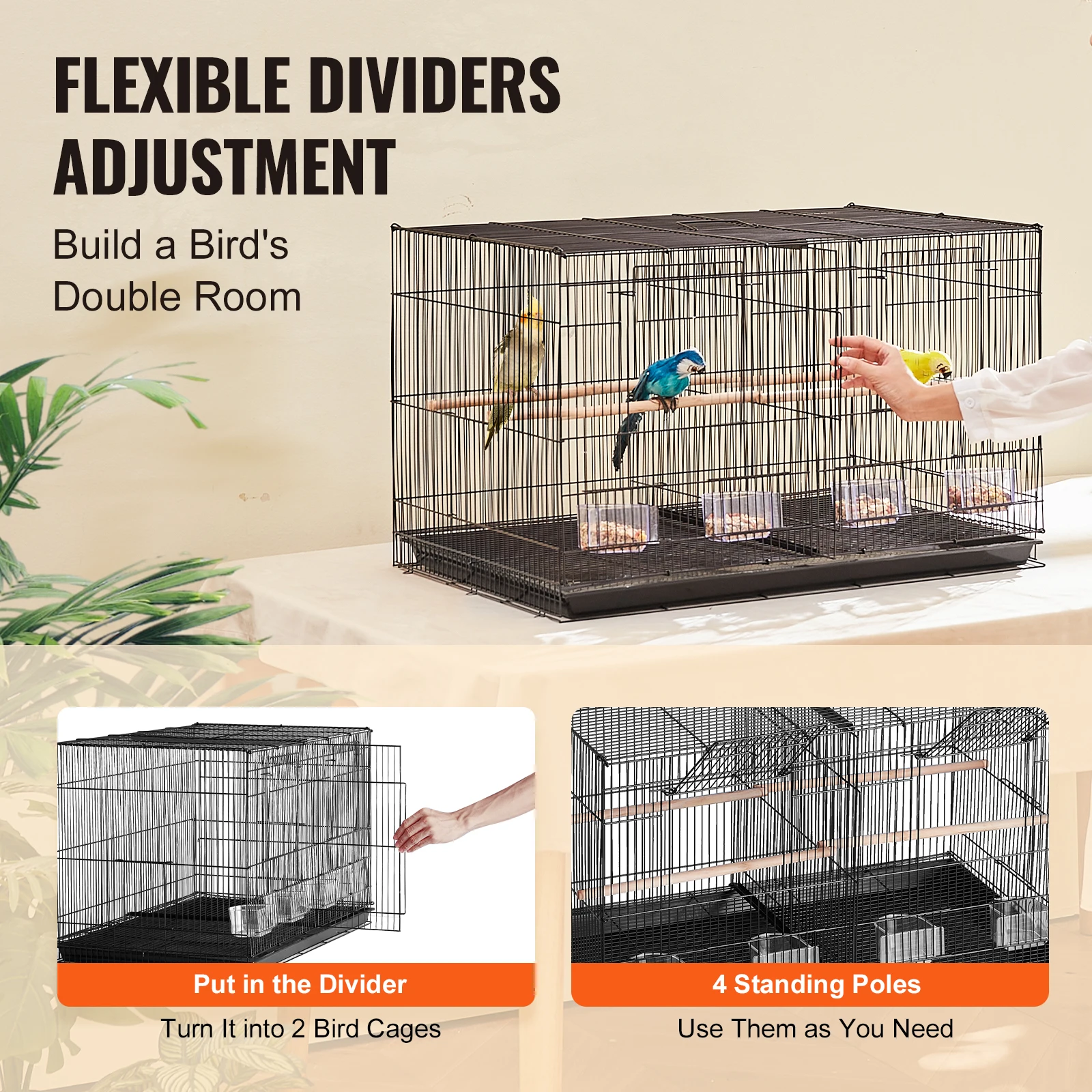
Why a divider is worth having
A removable centre panel turns one wide cage into two separate rooms. That sounds like a nice extra until the first time you need it.
You need it when a new bird arrives and has to be quarantined for a few weeks before it meets the others. You need it when a bonded pair starts fighting and has to be separated without either bird losing its territory. You need it when one bird is unwell and the vet asks you to keep it quiet and apart. Buying a second cage for those weeks is expensive and awkward to store. Sliding a panel in is not.
The doors decide whether you keep it clean
This is the part nobody thinks about in the shop and everybody thinks about on day four. If every food and water change means opening a main door, you will do it less often, and a nervous bird gets a daily scare it did not need.
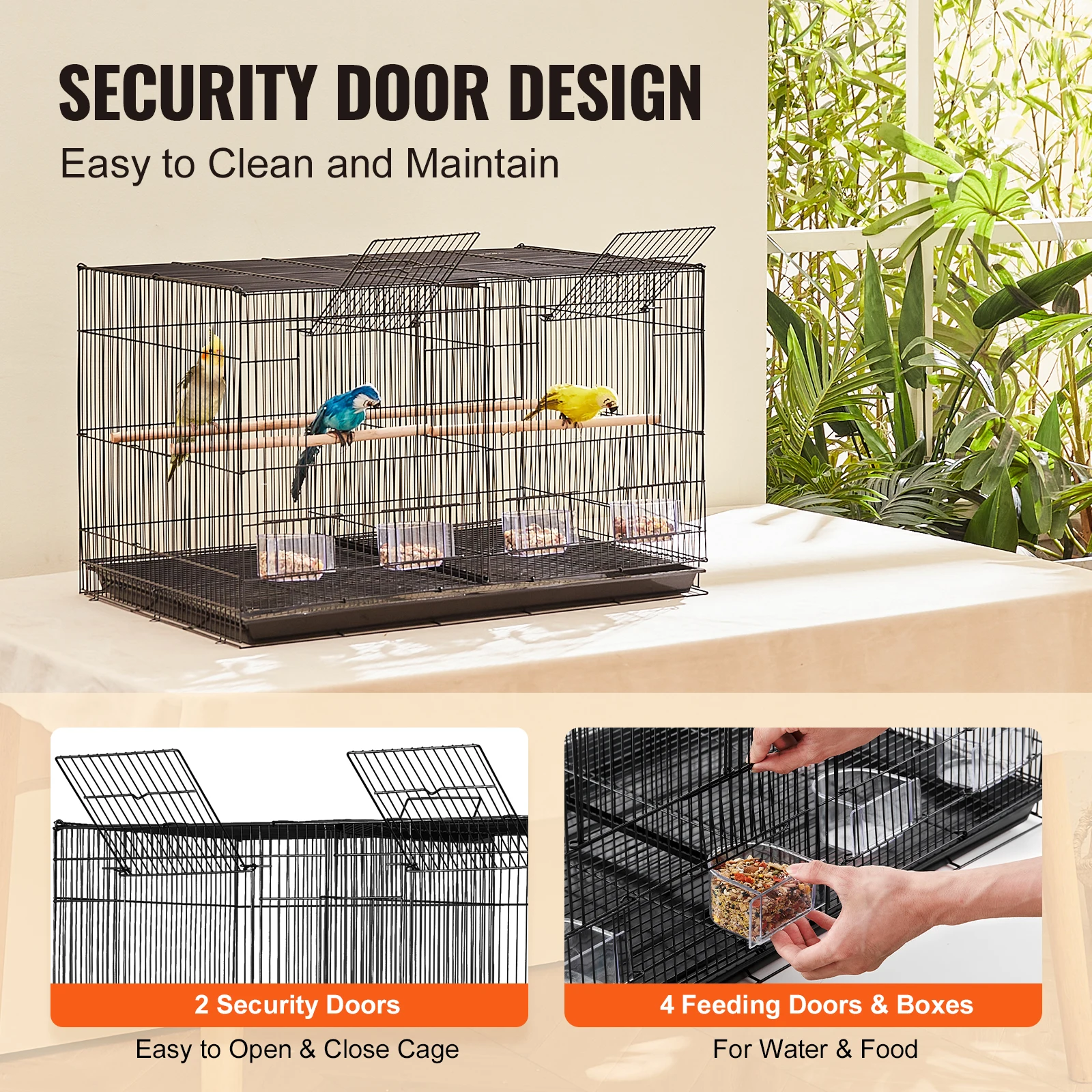
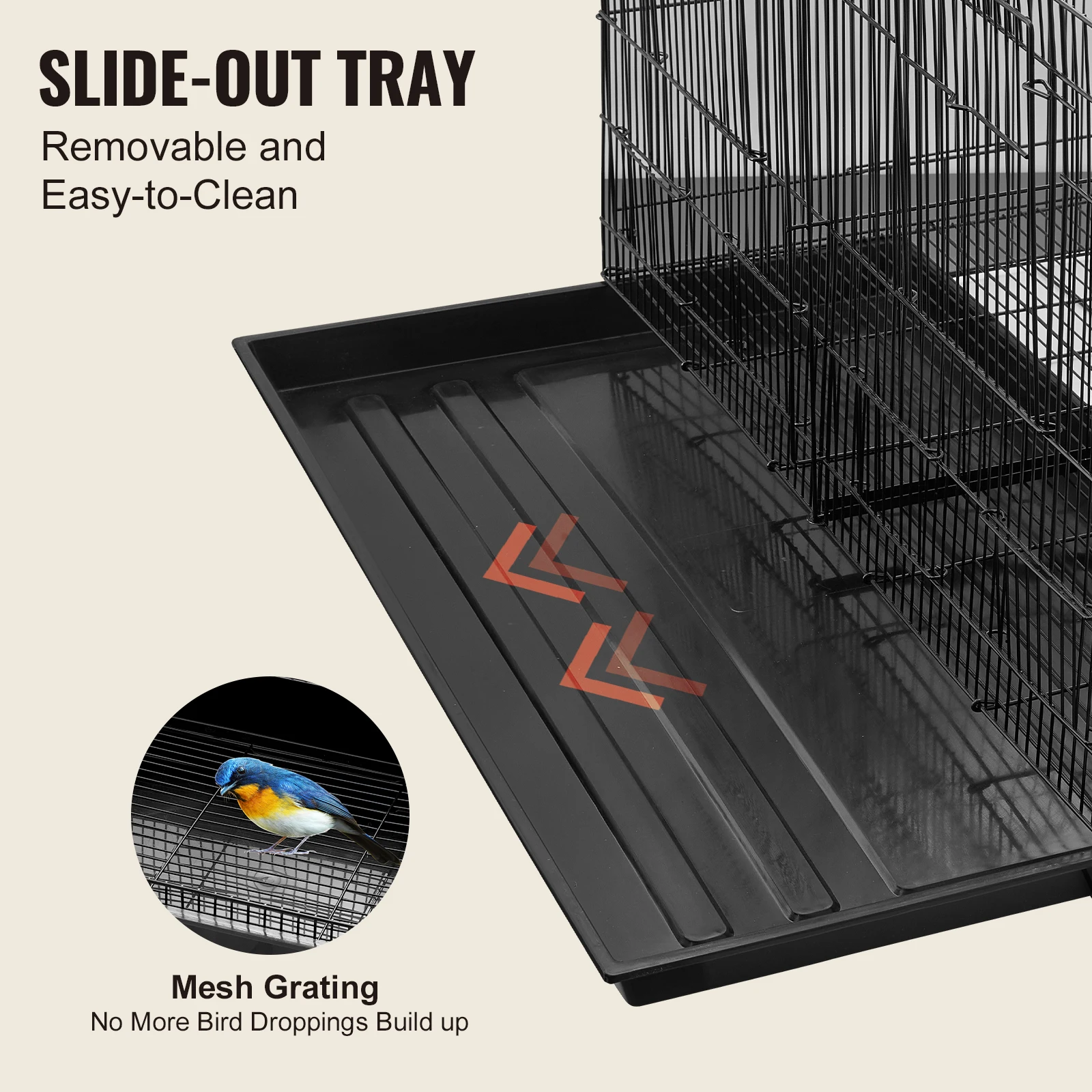
Four small feeding doors let you swap bowls from outside without opening the cage at all. Two main doors with spring latches let you get a hand in properly when you do need to. A slide out tray with a mesh grate over it means the daily clean is pulling one tray out and wiping it, rather than lifting the cage and chasing seed husks across the floor.
Where to put it, which matters more than the brand
Against a wall rather than in the middle of a room, so the bird has one side it does not have to watch. At roughly chest height, because a cage on the floor makes a prey animal permanently uneasy and a cage above head height makes it harder for you to interact. Out of the kitchen, because fumes from non stick pans can kill a bird quickly. Away from a window that gets direct afternoon sun, and away from a draught.
Give the cage a settled spot and leave it there. Birds map a room and then relax into it, so a cage that moves around the house every few weeks keeps resetting that process.
A cat in the same house changes all of this. Keep the cage in a room the cat cannot reach unsupervised, and give the cat somewhere better to be: a wall stairway or a tall cat tree on the other side of the house does more than telling it off ever will.
What goes inside
Perches of different diameters, so the feet work differently through the day and pressure sores do not build up in one spot. At least one natural wood perch, which is better for feet than smooth dowel. Food and water at opposite ends rather than side by side, so the bird has a reason to cross the cage. Clear flight space down the middle, which means resisting the urge to fill the whole cage with toys.
Two or three toys is plenty, rotated every couple of weeks so they stay interesting. A cage packed with toys is a cage a bird cannot fly in, which takes you back to the problem the width was meant to solve.
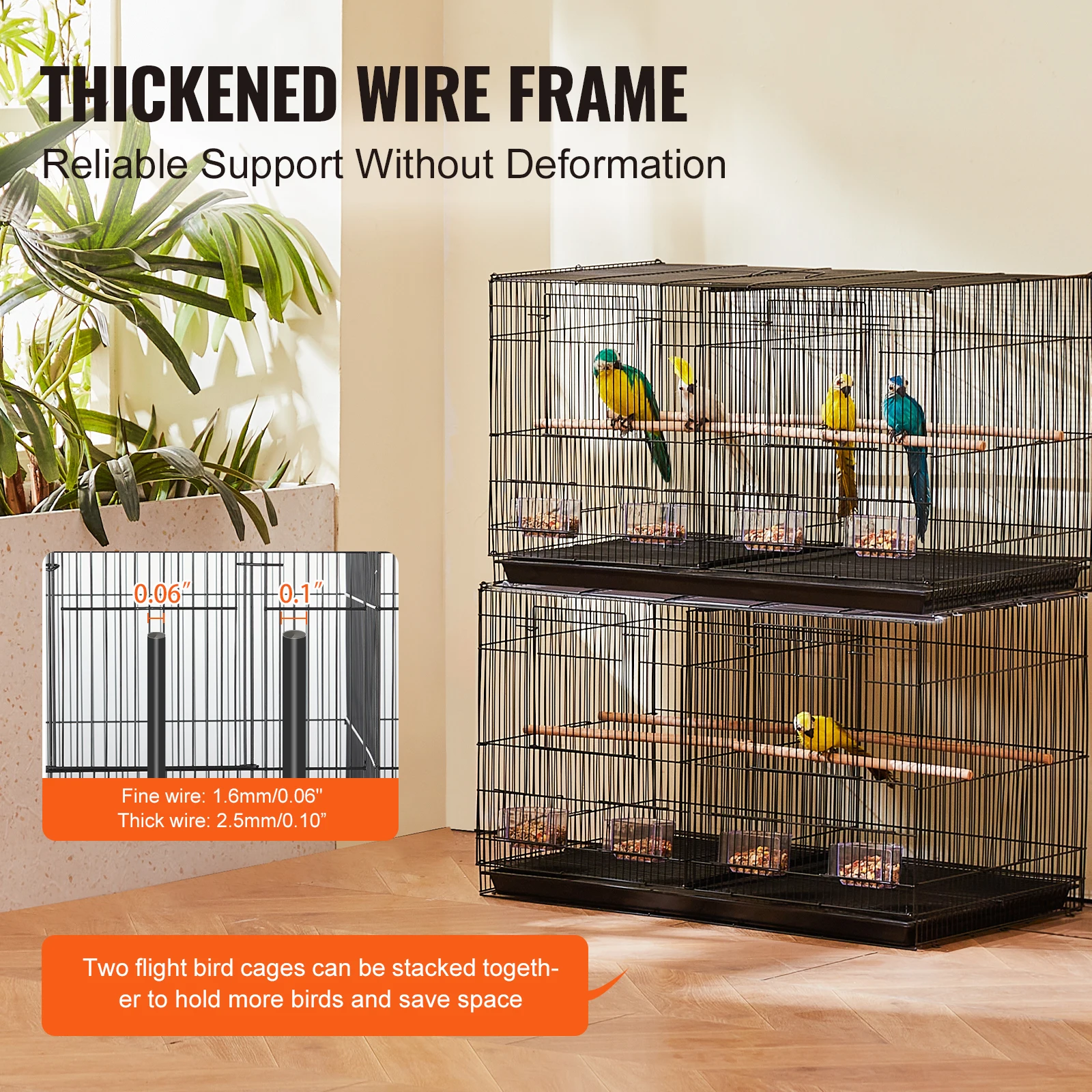
If a wide cage with a divider is the shape you need, the 30 inch flight cage ships from our US warehouse, and the rest of the range is in bird accessories and birds.
Common questions
How big should a cage be for two budgies?
Wider rather than taller, and at least 30 inches across so both birds can fly without colliding. Two budgies in a 30 inch cage with clear space down the middle do better than two in a tall ornamental cage of the same volume.
What bar spacing is safe for parakeets?
Half an inch at most. Wider gaps risk a bird getting its head through and being unable to pull back. Check this before anything else.
Can budgies and cockatiels share a cage?
Sometimes, with enough space and careful introduction, but cockatiels are larger and budgies can be pushy. A divider lets you house them side by side and see how they behave before committing to one shared space.
Do birds need a cage cover at night?
Most do better with one. Covering three sides and leaving the front open is usually enough to signal sleep without making the bird feel shut in. Birds need roughly 10 to 12 hours of dark and quiet.
How often should the tray be cleaned?
Daily for the liner, weekly for the grate and tray, and a full wipe down of perches and bars every few weeks. A slide out tray makes the daily part a one minute job, which is the only reason it gets done every day.
