
Why Your Cat Does Not Drink Enough Water
Cats are bad at drinking. Not careless, not fussy, just built for a different climate. The domestic cat descends from a desert animal that got nearly all its water from prey, and that ancestry left it with a weak thirst drive and kidneys that concentrate urine hard. Put that cat on dry biscuits in a centrally heated house and the sums stop working.
Chronic low level dehydration is behind a lot of what turns up at the vet later: urinary crystals, cystitis, constipation, and the kidney disease that eventually affects a large share of older cats. The good news is that the fixes are small and mostly cost nothing.
How much water a cat actually needs
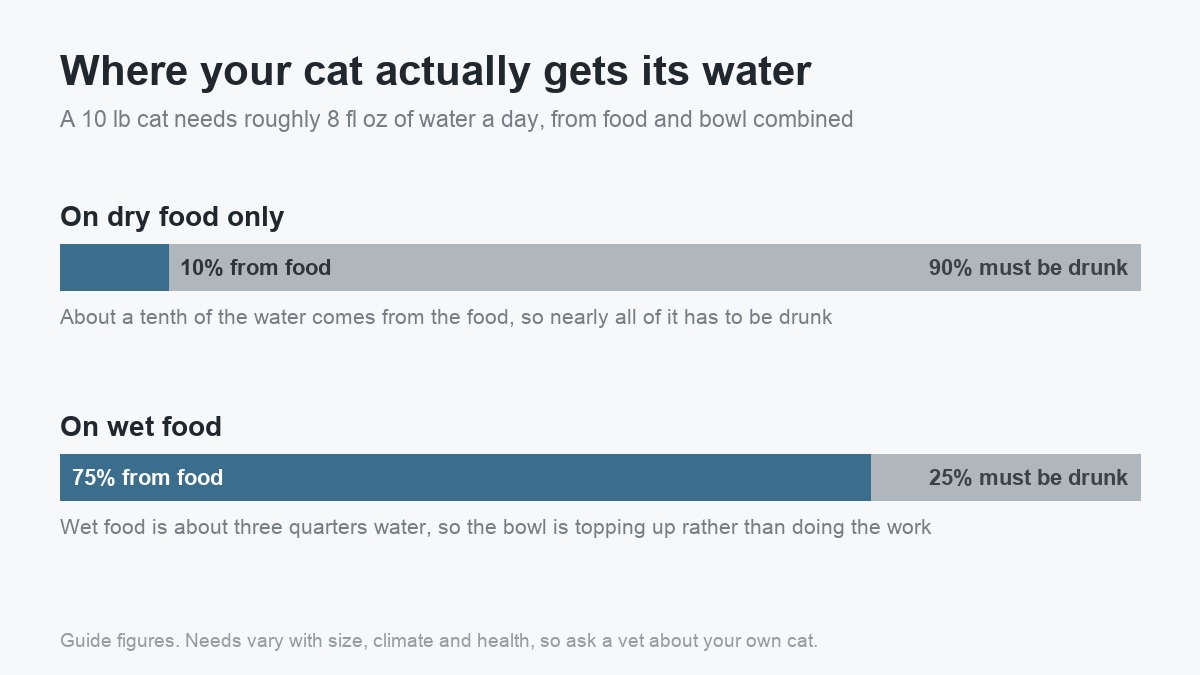
A rough guide is about an ounce of water per pound of body weight per day. A ten pound cat therefore needs somewhere around eight fluid ounces, a cup, every day, and that total includes everything it eats as well as everything it drinks.
That last part is what people miss. Wet food is roughly three quarters water, so a cat eating wet food has already taken most of its daily requirement before it goes near the bowl. Dry food is about a tenth water, so a cat on biscuits has to drink nearly the whole amount. Same cat, same requirement, completely different job.
Worth saying plainly: these are guide figures. Needs change with size, with the weather, with pregnancy and with illness, and a cat that suddenly starts drinking much more than usual should see a vet rather than be congratulated. A sharp increase in thirst is one of the clearer early signals of kidney disease, diabetes and thyroid problems.
Why the bowl in the corner gets ignored
Three reasons come up again and again, and none of them is stubbornness.
It is next to the food. Cats evolved to eat prey away from water because a carcass fouls a water source. Many cats will simply not drink beside a feeding station, and moving the bowl to another room is free.
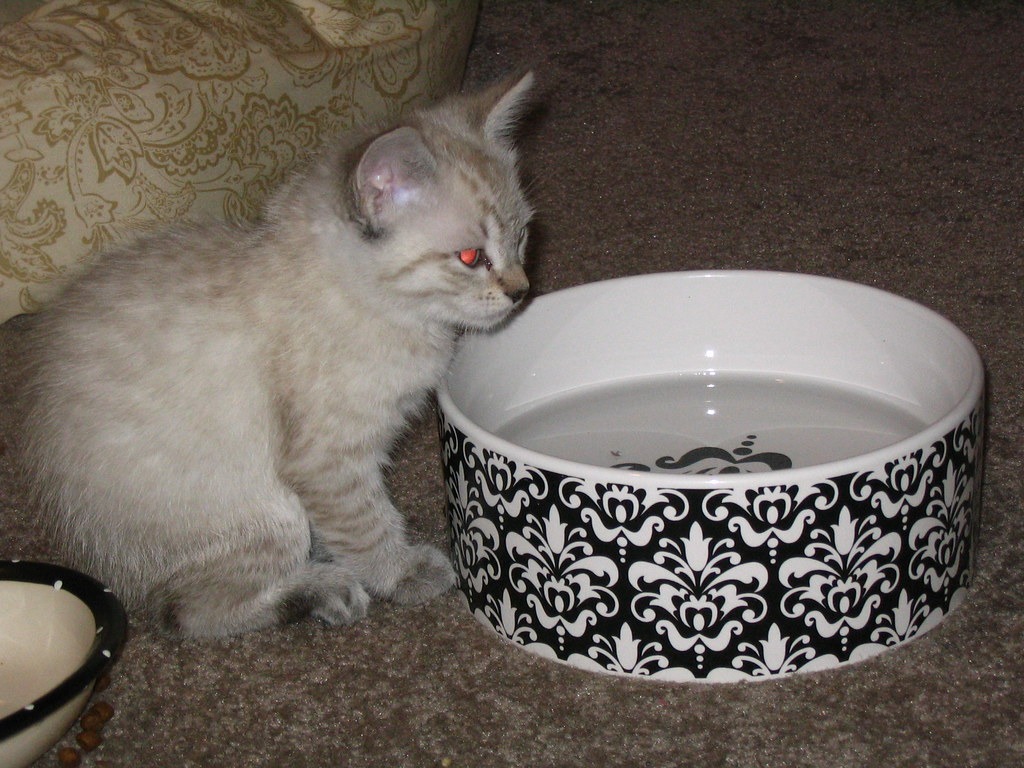
The bowl is too deep and too narrow. Whiskers are sensory equipment, not decoration, and pressing them against the sides of a bowl is genuinely unpleasant. A cat that drinks with its head twisted sideways, or that paws water onto the floor and licks it off, is telling you the bowl is wrong.
The water is old. Still water in a plastic bowl picks up a film and takes on the taste of the bowl within a day. Cats can tell, and they will hold out longer than you expect.
Running water is not a luxury
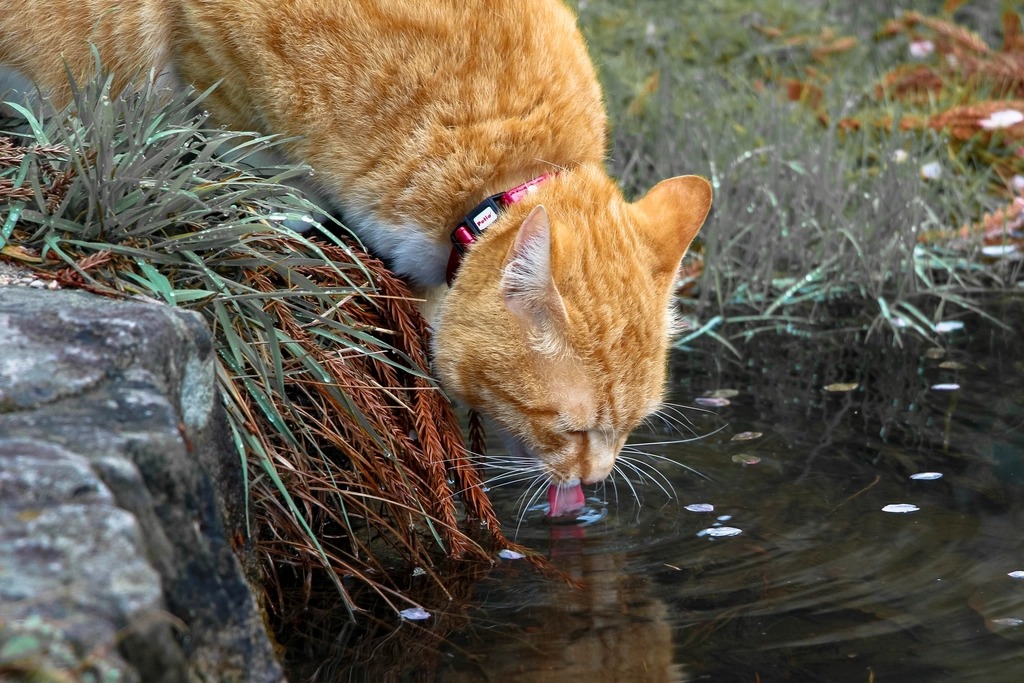
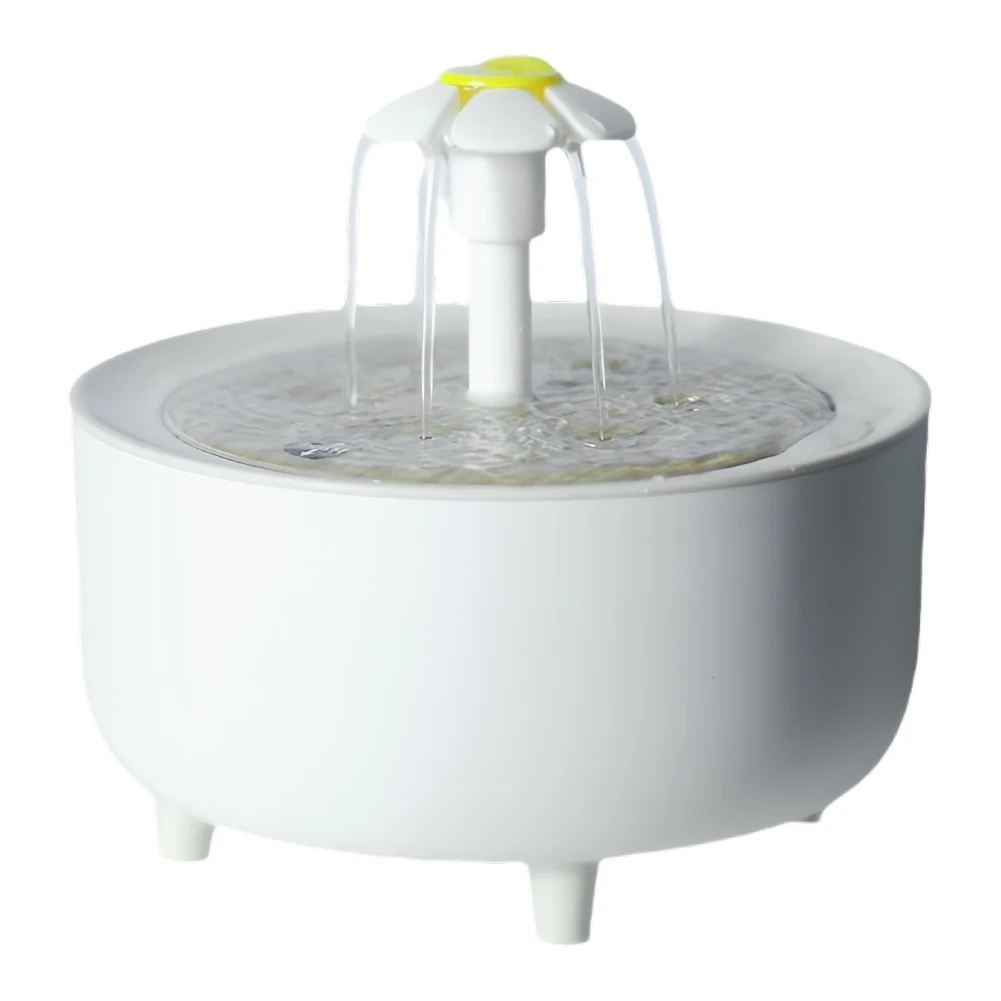
In the wild, moving water is safer water, because standing water in a desert is the water most likely to have gone bad. That preference survives in the house cat, which is why so many of them would rather drink from a tap than from the bowl you filled an hour ago.
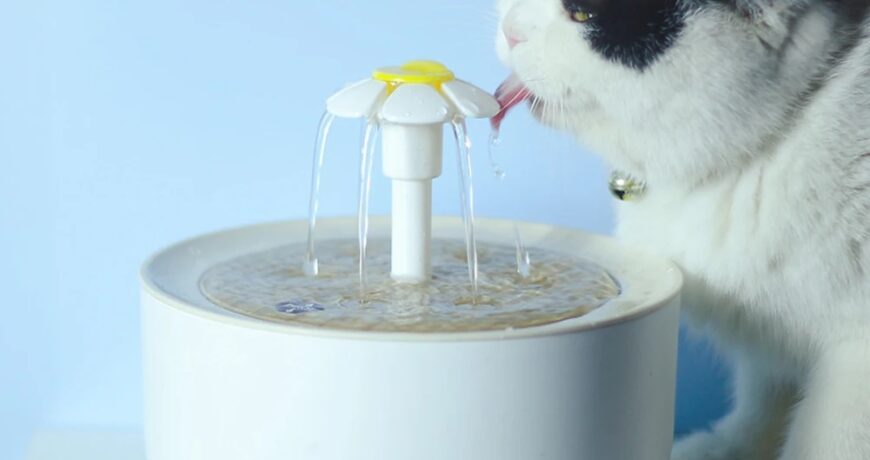
This is also why fountains work so well for cats that otherwise barely drink. The movement keeps the water aerated and tasting fresh, the filter takes out the dust and hair that collect in any open bowl, and the sound draws the cat over in the first place. Our quiet filtered fountain holds 1.2 litres, which is several days for one cat, and the pump is quiet enough that a nervous cat will still approach it.
If you buy one, run it for a few days alongside the old bowl rather than instead of it. Cats take badly to a water source vanishing overnight.
Shape and height matter more than people expect
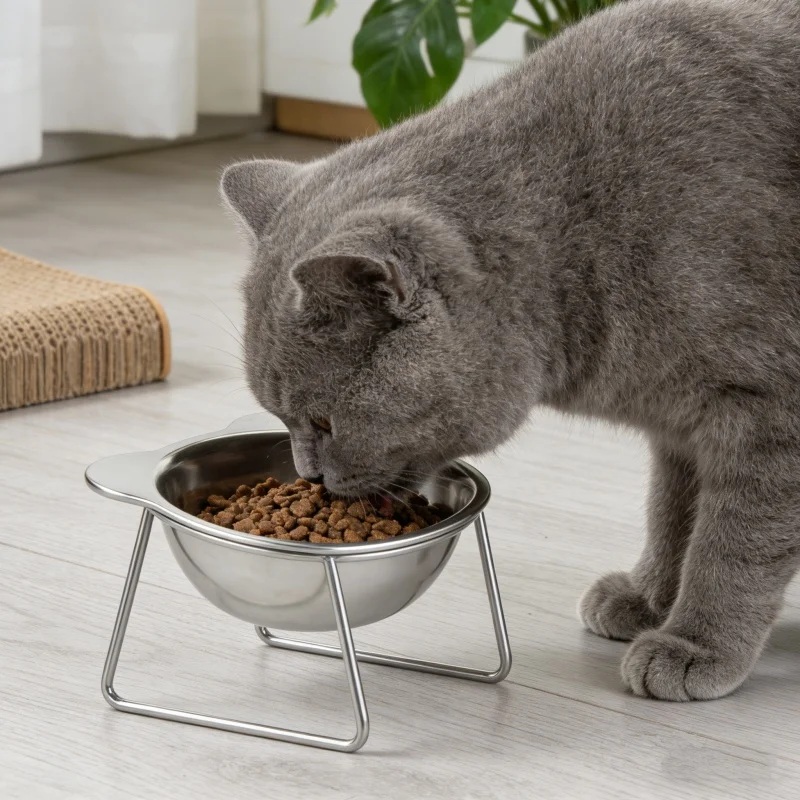
A wide shallow dish solves the whisker problem on its own, and raising it a few inches off the floor solves a second one. Eating and drinking with the neck bent down is harder work than it looks, particularly for an older cat with any arthritis, and a cat that finds the position uncomfortable will cut the session short.
A raised and tilted bowl brings the water up to the cat rather than the other way round, and the tilt means the cat can empty it without burying its face. Stainless steel is worth it over plastic too, because it does not scratch, and scratches are where the film and the taste live.
Six things to try this week
Put a second bowl somewhere the cat already spends time, well away from the food. Most cats drink more simply because there is more opportunity.
Switch to a wide shallow dish, or any bowl the whiskers clear comfortably.
Change the water daily and wash the bowl properly rather than topping it up.
Add wet food, even one pouch a day. It is the single biggest lever in this whole list.
Try a fountain if your cat has ever drunk from a tap, a shower tray or a watering can.
Watch what happens. A cat drinking noticeably more or noticeably less than usual is worth a vet appointment, not a wait and see.
More than one cat changes the arithmetic
Water is a resource, and resources are where cats negotiate. In a multi cat house the quiet one often drinks less than you think, not because it is not thirsty but because the route to the bowl passes the confident one’s favourite spot. Guarding is rarely dramatic. It is usually a look, or simply sitting in a doorway.
The standard advice is one more water station than you have cats, placed so that no cat has to pass another to reach one. On different floors if you have them. It sounds excessive until you watch which bowl actually goes down fastest, which is often not the one in the kitchen.
The same logic applies to litter trays, and for the same reason, so if the water is being guarded it is worth checking whether the tray is too. We went into that in the litter box guide.
What to look for
Mild dehydration is easy to miss because the signs are dull. A cat may be lethargic, eat less, or produce small hard stools. The skin tent test, lifting the scruff gently and watching it fall back, is a crude check and it is less reliable in older cats who have lost elasticity anyway, so do not rely on it alone.
The clearer signal is the litter tray. Very small or very hard clumps mean concentrated urine. Straining, going repeatedly, or any blood is an emergency rather than a hydration tip, particularly in male cats, where a blockage can become life threatening within a day.
None of this replaces a vet. If your cat is off its food, hiding, or straining in the tray, that is a phone call today, and water is the long game rather than the treatment.
