
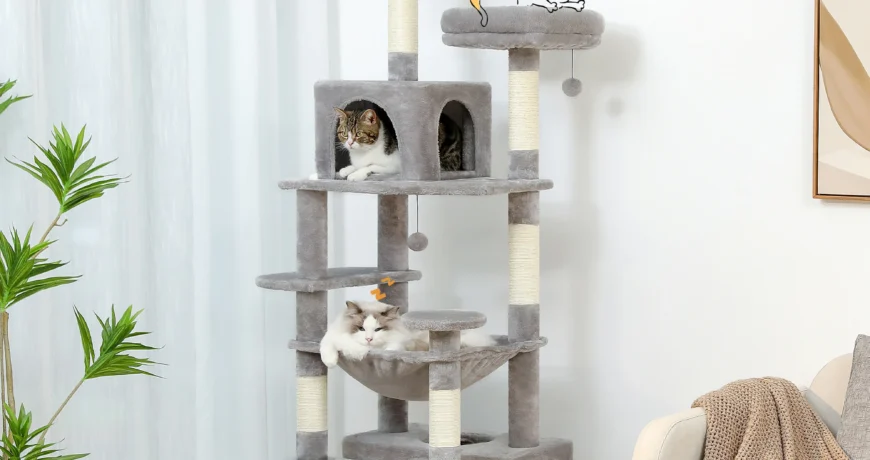
How to Choose a Cat Tree Your Cat Will Actually Use
Cats are having a moment. The American Pet Products Association counted roughly 53 million US households with a cat after a 5% rise in 2025, and this month both Chewy and Petco told investors the cat side of their business is the part that keeps growing. Chewy chief executive Sumit Singh put it bluntly on the company’s 9 September earnings call: “dog seems to be worsening; cat seems to be strengthening.” More cats means more cat furniture bought, and a fair chunk of it ends up ignored in a corner.
Short answer: pick a cat tree with sisal rope posts, at least two levels, a base that does not shift when your cat lands on it, and a total height that suits your cat’s age. Most adult cats do well between 40 and 72 inches. Then put it where your cat already spends time, ideally next to a window.
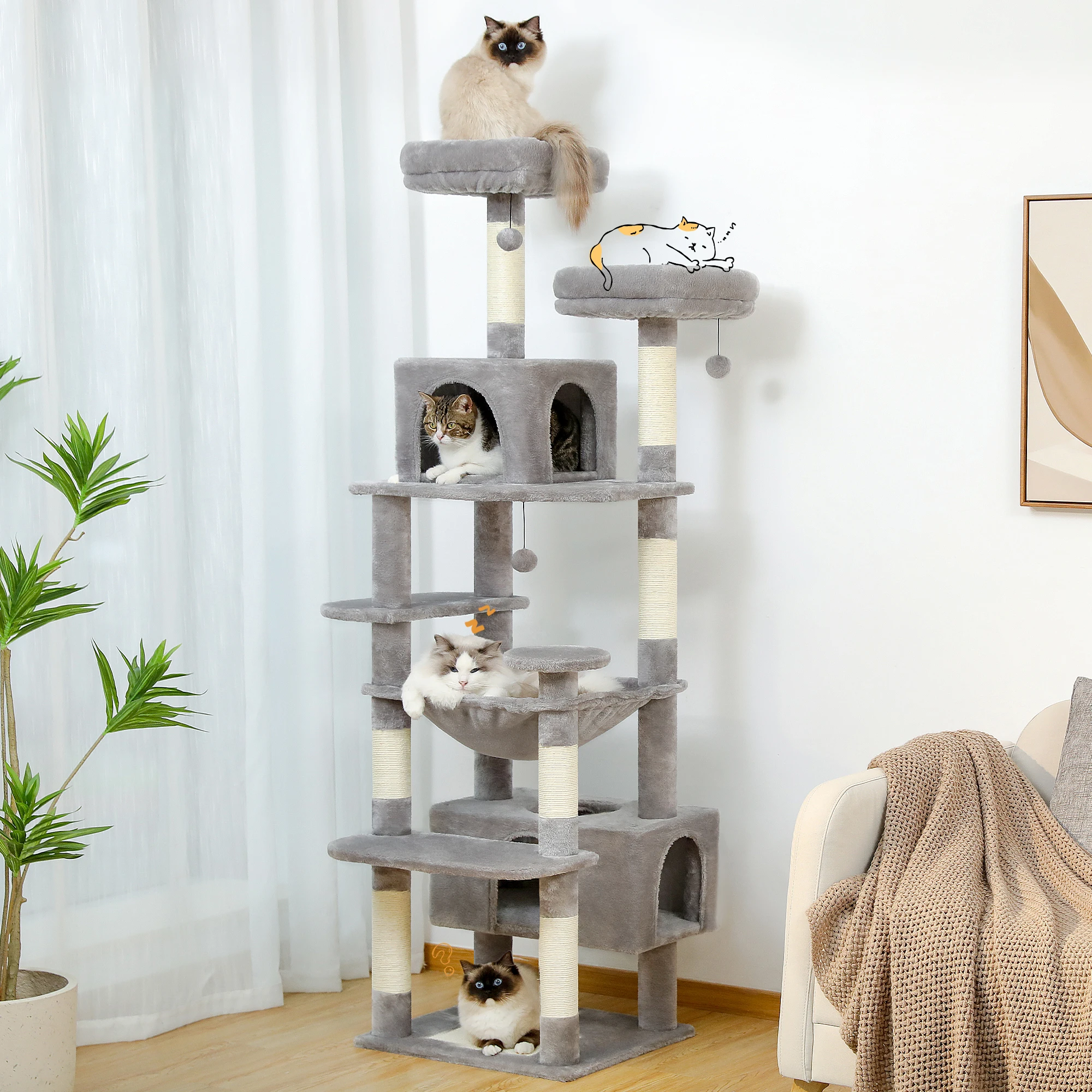
What 4,105 cat owners told researchers
Most cat tree guides tell you taller is better and leave it there. There is actual data on this. A survey of 4,105 owners published in the Journal of Feline Medicine and Surgery in 2016 asked what cats really scratch and climb at home, and the answers are useful when you are staring at twenty listings.
- Rope wins for younger cats. Cats aged nine and under used rope (sisal) most often at 32.5%, ahead of carpet at 25.1% and cardboard at 18.2%.
- Seniors flip that order. Cats over ten preferred carpet at 24.7%, then rope at 22.9%, then cardboard at 19.6%.
- Two levels or more. Cat trees with two or more levels and plain vertical posts were used most. Single level trees and wall mounted or hanging scratchers came bottom.
- Narrow bases got used. 88.1% of cats used posts with a base under three feet wide, against 9.1% for wider ones.
- It gets used daily. 89.3% of owners said their cat used its favourite post at least once a day, often more.
One finding is worth sitting with. Cats scratched shorter posts under three feet more often, yet furniture scratching dropped when the post was taller than three feet. Height is not what attracts a cat. Height is what satisfies the full body stretch that would otherwise happen on the arm of your sofa.
How tall should your cat tree be?
Work from your cat and your ceiling, not from the biggest photo on the listing.
- Kittens and cats over twelve: 30 to 50 inches, with a ladder or a step that breaks the climb into stages.
- Typical adult cat: 50 to 65 inches covers the stretch, the climb and a perch worth sitting on.
- Big breeds and keen climbers: 65 to 72 inches and up, if the platforms are wide enough to hold them.
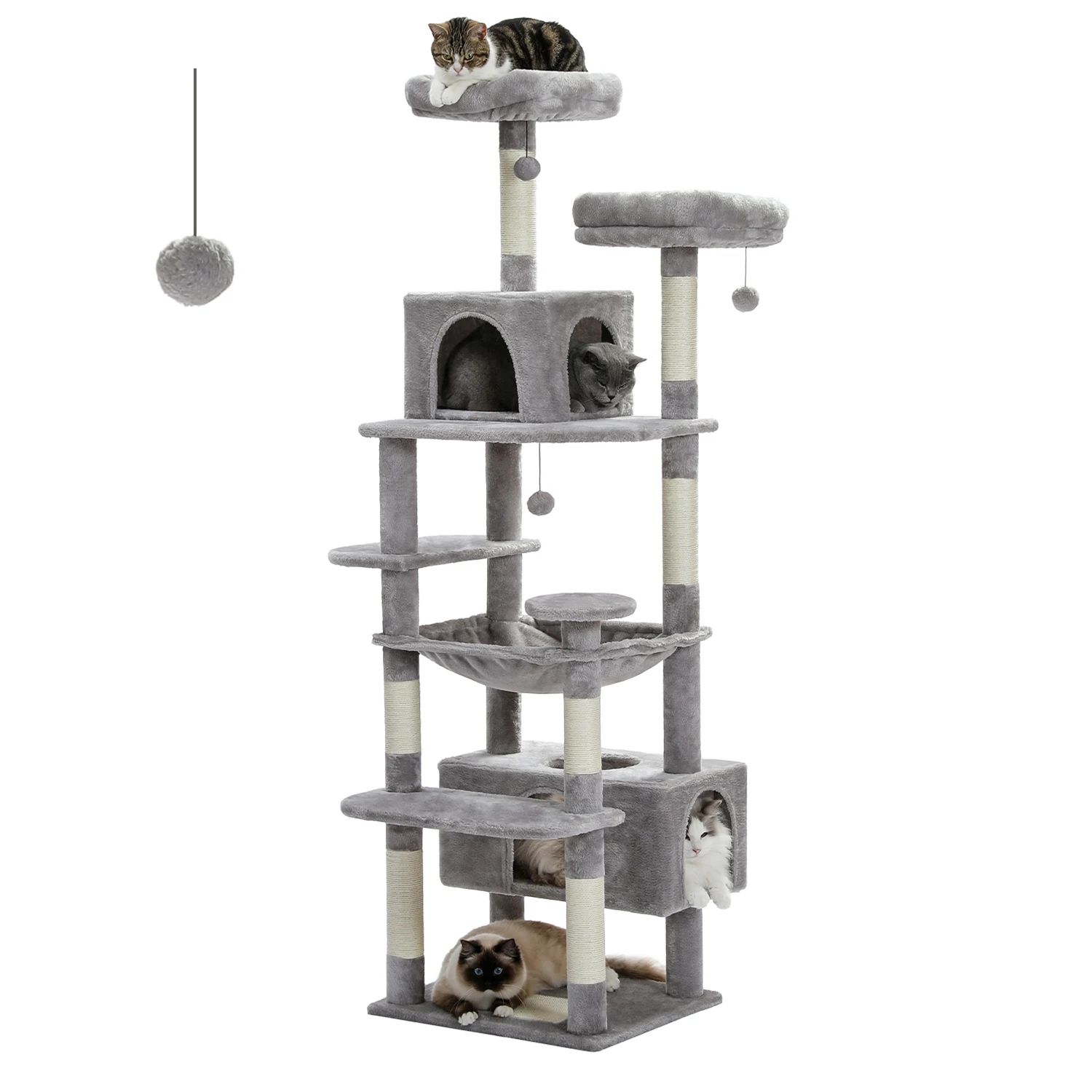
Leave at least a foot of clear air above the top perch so your cat can sit upright without ducking. Measure the spot before you order, because a 72 inch tower under a low ceiling turns the best seat in the house into a crawl space. Our tall multi level tower comes in 54, 65 and 72 inch versions for exactly this reason.
Stability beats height every time
A cat lands on a top perch with real force. If the tower rocks once, plenty of cats never go back up. That single wobble is behind a lot of the “my cat hates her new tree” posts on cat forums.
Check three things before you buy. Look for a thick base board rather than a thin panel, because weight low down is what stops the sway. Look for posts anchored through the platforms rather than stapled to the surface. Then read reviews with the word wobble in them, since that is where owners of tall towers are honest.
There is a neat contradiction in the survey data here. Cats used narrow based posts far more often, yet a narrow base on a tall tower is what causes the rocking. The way around it is a tower whose footprint is compact but whose base is heavy and whose upper levels are tied together, which is how a multi level design stays steady where a single tall pole cannot.
Sisal or carpet?
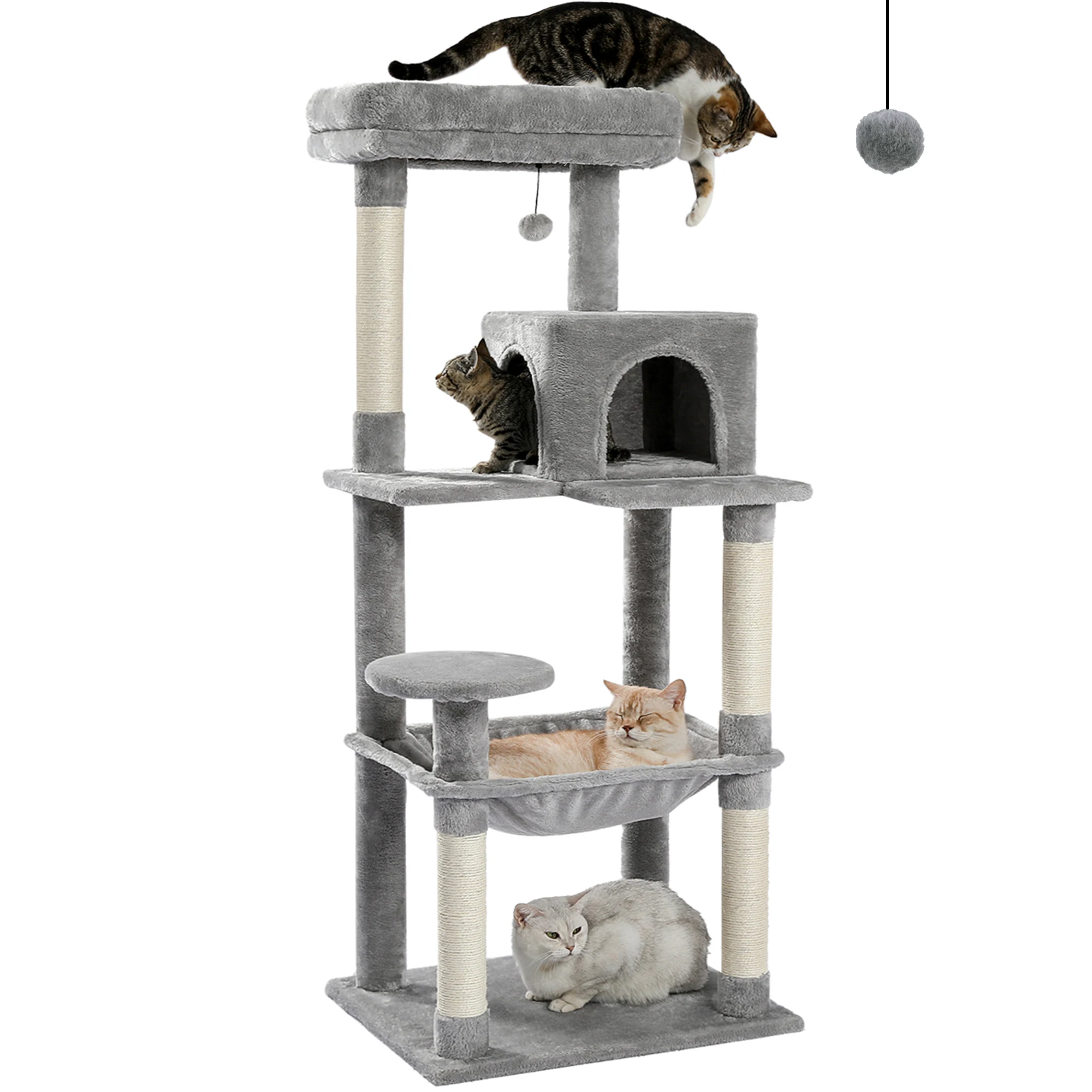
For a cat under about nine, sisal rope is the safer bet on the numbers above. It shreds in a way cats seem to like, and it wears slowly. Carpet covered posts have one real drawback beyond preference: they teach a cat that carpet is a legitimate scratching surface, which is awkward if your stairs are carpeted.
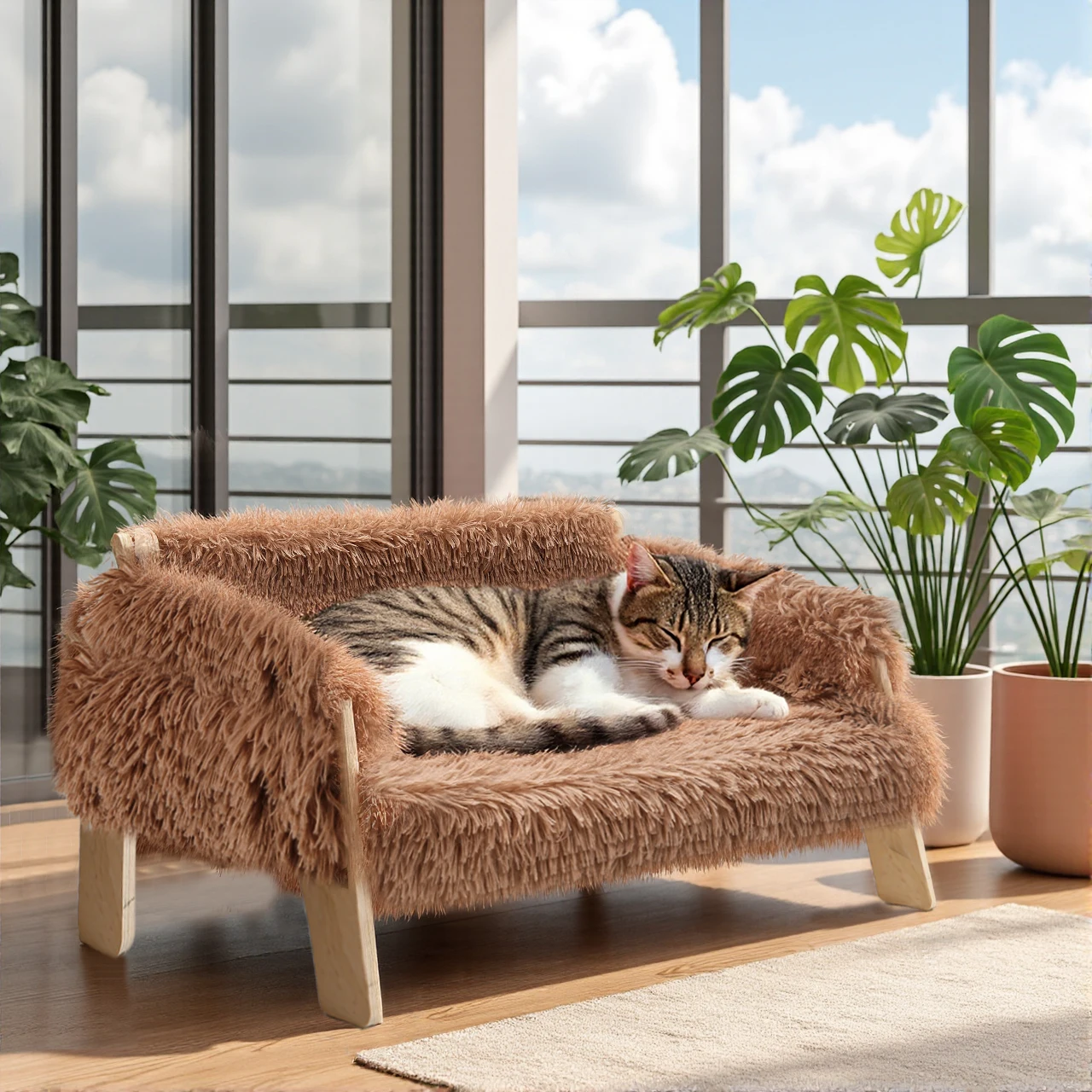
For an older cat, the survey flips. Carpet came out ahead for cats over ten, probably because worn claws and stiff shoulders favour a softer surface. If you have a senior, a low carpeted platform or a soft raised bed like our raised plush cat sofa bed may get more use than any tower.
Condo, hammock or open platform?
Cats want two different things at different times of day: a spot with a view, and a spot where nothing can see them. Ohio State’s Indoor Pet Initiative makes the first point plainly, saying a perch gives a cat “a safe and private place to watch the action from above” and that more than one perch lets them look outside at different angles.
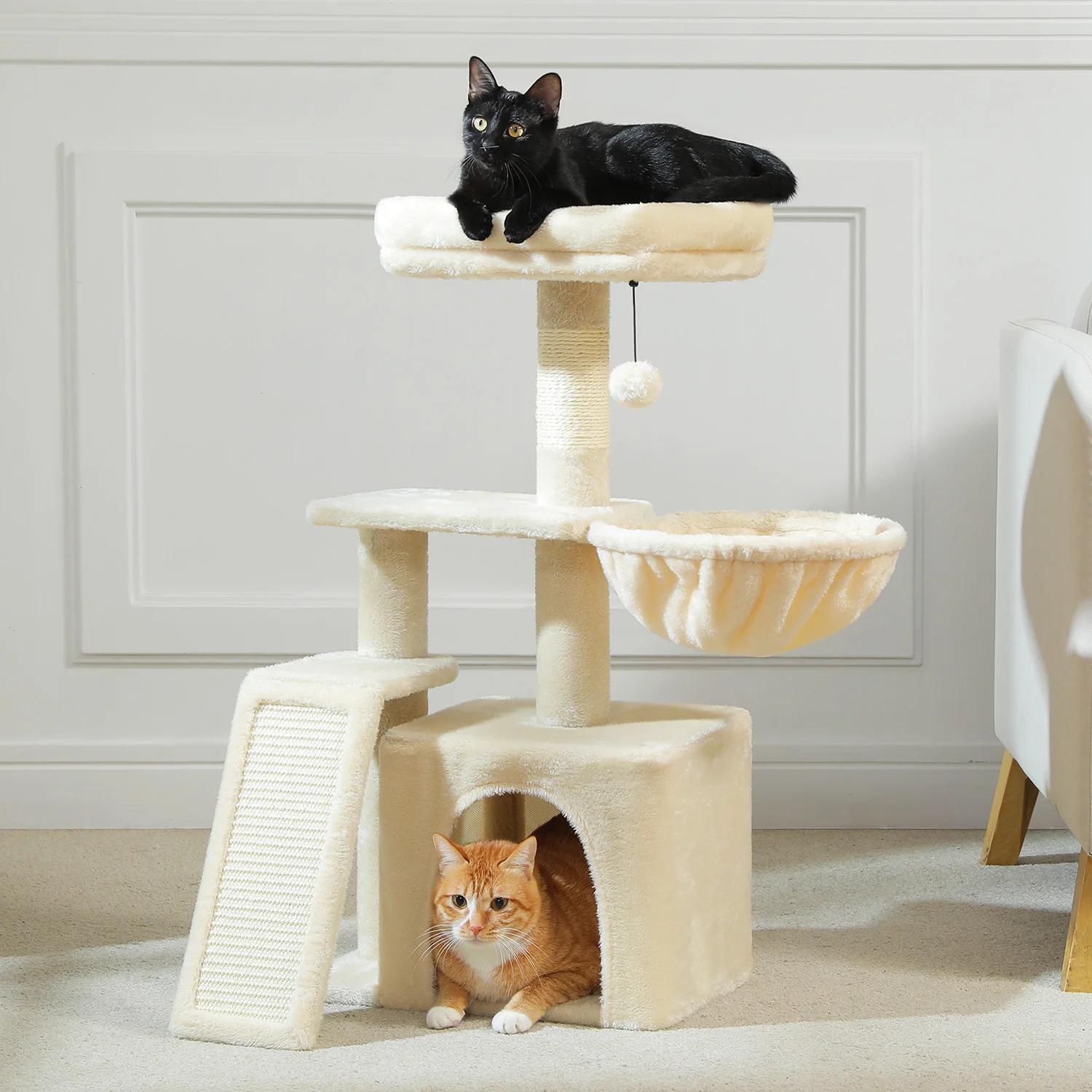
So a tree that mixes an enclosed condo, a hammock and an open top perch gives your cat somewhere to go whether the house is busy or quiet. A tower that is nothing but flat shelves offers a view and no refuge, which is often why the nervous cat in the house stays under the bed instead.
Where you put it decides whether it gets used
Placement does more work than any feature on the spec sheet. Put the tree where your cat already chooses to be: the window they watch birds from, the room you sit in, the doorway they patrol. A tree in the spare room is furniture for you, not for them.
If the goal is saving your sofa, put the tree next to the spot being scratched, then move it a few feet at a time once it is being used. Placement alone will not fix it though. In the same survey, nearly half the owners who still had furniture scratching already had a post within five feet of the damage, which says the post itself was wrong for that cat.
Two cats or more
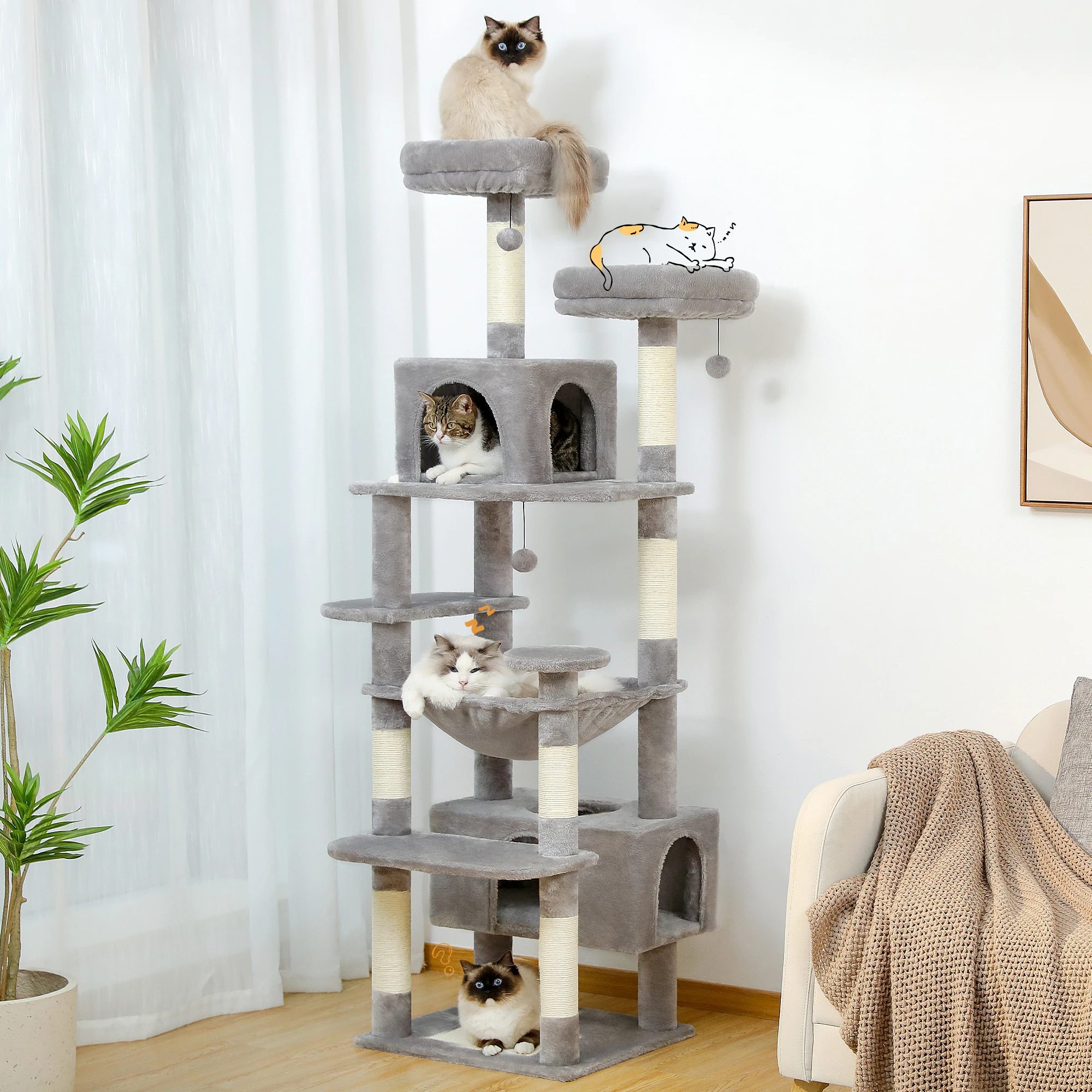
Cats share floor space badly and vertical space well. With two or three cats you want separate levels at different heights so nobody has to squeeze past anyone, plus a second scratching option in another room. Two smaller trees in two rooms usually beat one giant tower in the lounge, because the cat at the bottom of the pecking order still gets somewhere high to sit.
Matching a tree to your home
- Small flat, one cat, low ceiling: a compact tower with a condo and hammock under three feet tall. It fits beside a window without dominating the room.
- Two or three cats, normal ceiling: a five level tower with a big hammock and four full height sisal posts.
- Big cat or serious climber: the 65 or 72 inch version of our tall tower, with wide platforms and two condos.
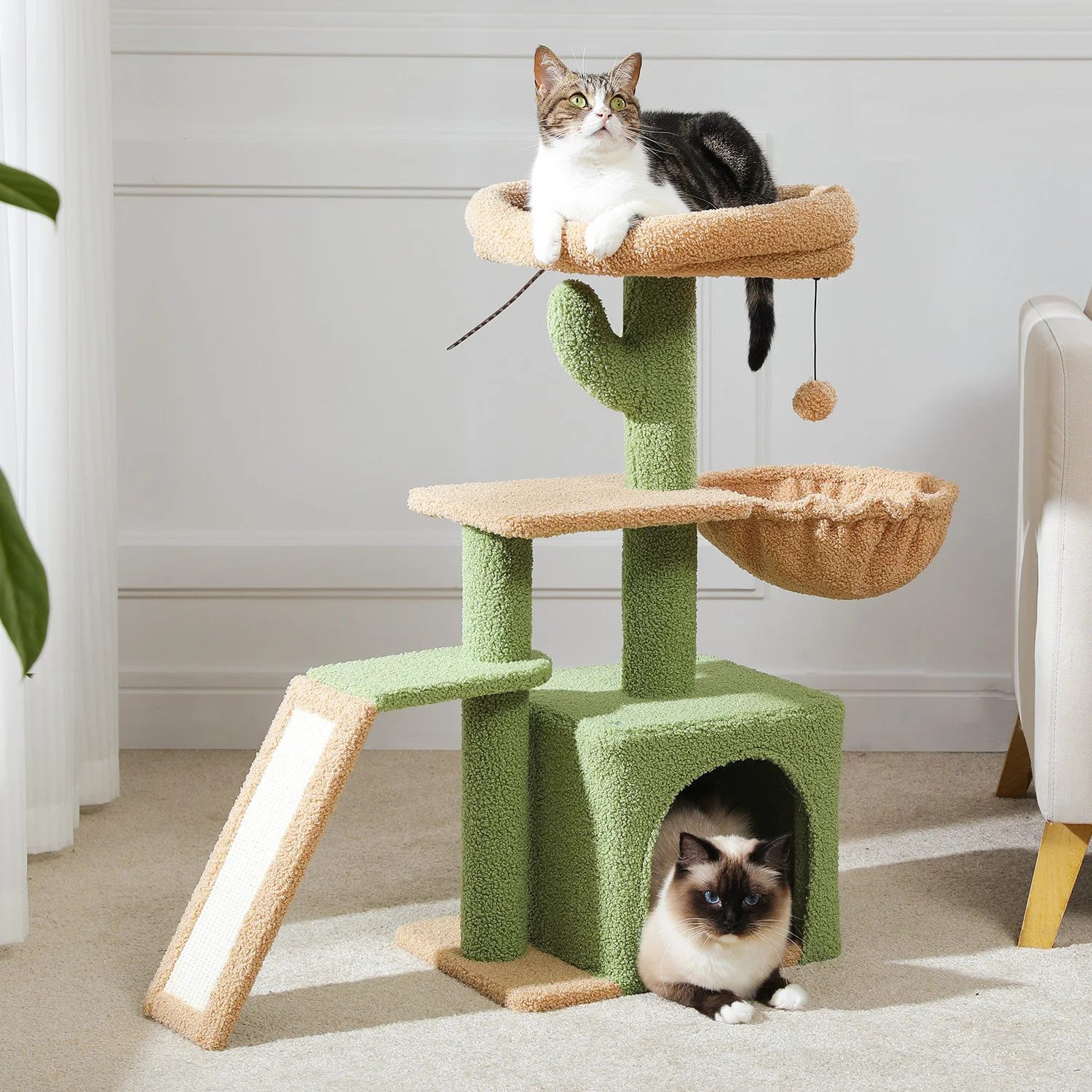
You can see all of them in our cat accessories range, and the soft options live in cat beds. Everything ships from our US warehouse.
Your cat still ignores it. Now what?
- Move it before you blame the tree. Two rooms and a week of patience solves a surprising number of cases.
- Let the smell fade. New trees carry a factory smell that puts sensitive cats off. Wipe the platforms with a damp cloth and give it a few days in a ventilated room.
- Make the top worth reaching. Treats on the top perch, a wand toy pulled up the posts, ten minutes of play that ends there.
- Add your cat’s scent. A blanket they already sleep on beats anything you can buy.
- Never lift them onto it. Being carried up a wobbling tower is the fastest way to teach a cat that the tower is not safe.
Boredom plays a part too. A tree is furniture, not entertainment, so pair it with something that moves on its own. Our cat toys cover the days when nobody is home to wave a wand around.

One last thing. If a cat who always climbed suddenly stops, that is worth a vet visit rather than a new tree. Arthritis is common and easy to miss in cats, and it often shows up first as a cat who now sleeps on the floor.
Frequently asked questions
How tall should a cat tree be?
For most adult cats, 50 to 65 inches gives a full stretch on the posts and a perch above eye level. Kittens and cats over twelve do better between 30 and 50 inches with a ladder or staged platforms. Leave 12 inches of clearance above the top perch.
Do cats prefer sisal or carpet?
Cats aged nine and under used sisal rope most often in the 4,105 owner survey, at 32.5% against 25.1% for carpet. Cats over ten preferred carpet. Buy sisal for a younger cat and keep a carpeted or flat option around for a senior.
Where should I put a cat tree?
Next to a window in a room the household actually uses. Cats want a view and company at a safe height. A quiet spare room is the most common reason a good tree gets ignored.
Will a cat tree stop my cat scratching the sofa?
It helps when the post is taller than three feet, wrapped in sisal and placed near the sofa. Furniture scratching dropped with taller posts in the survey, though almost half of owners who still had damage already had a post within five feet, so the type of post matters as much as the distance.
How many cat trees do I need for two cats?
One tree with several levels can work, but two smaller trees in different rooms usually works better. It gives the less confident cat a high spot of its own instead of one contested tower.
Sources
- Wilson C, Bain M, DePorter T, Beck A, Grassi V, Landsberg G. Owner observations regarding cat scratching behavior: an internet based survey. Journal of Feline Medicine and Surgery, 2016. 4,105 respondents.
- Ohio State University Veterinary Medical Center, Indoor Pet Initiative: perches.
- CNBC, Cat ownership and food sales rise while dog demand falls, 24 September 2026, reporting American Pet Products Association ownership figures and earnings call comments from Chewy and Petco.
